


 English - EN
  繁體 - ZH-TW
  简体 - ZH-CN
  Español - ES
  日本語 - JA
  العربية - AR
  Русский - RU
  Français - FR
PVC Ceiling Machine Guide: Features, Applications, and Buying Tips
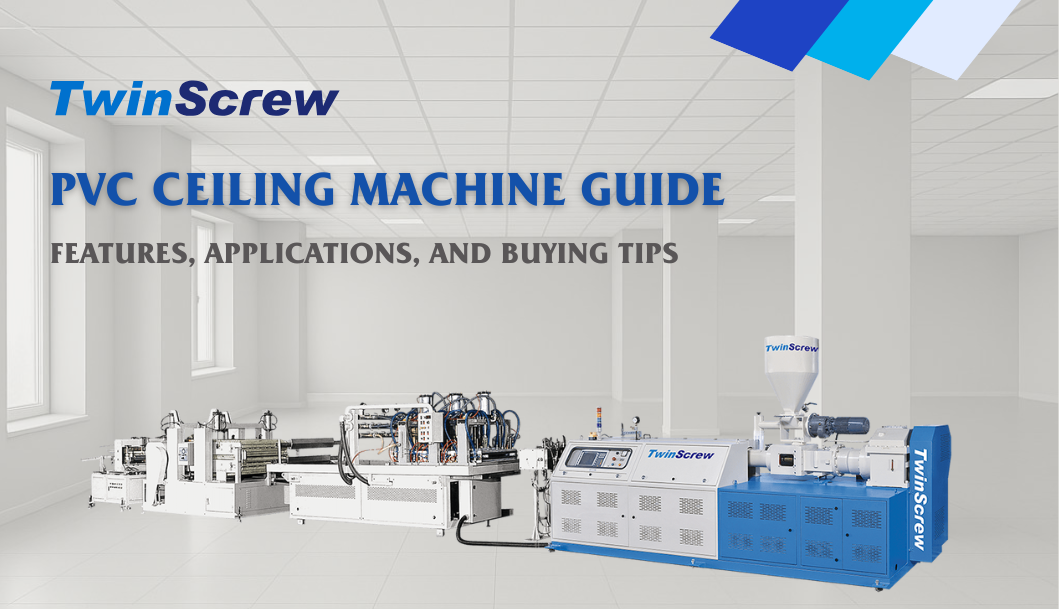
In the wake of the global pandemic, the checklist for architectural design has fundamentally changed. For hospital administrators, shopping mall developers, and school boards, the conversation is no longer just about cost or aesthetics. It is about "survivability"—specifically, hygiene and fire safety.
Walk into a modern isolation ward or a high-traffic international airport today, and look up. The ceiling above you is doing a job far more critical than simply hiding wires. It is the first line of defense against dust accumulation and pathogen spread.
This shift has created an unprecedented demand for materials that are non-porous, washable, and strictly fire-retardant. While traditional gypsum and mineral fiber boards struggle to meet these dual requirements—often absorbing moisture or harboring mold—PVC ceiling panels have emerged as the clear victor.
But for the manufacturers supplying these panels, this opportunity comes with a hidden challenge: Standards.
To meet international safety standard, a PVC panel cannot just be "plastic." It must be a sophisticated composite of PVC resin, stabilizers, and high loads of fire-retardant additives.
Producing this high-spec material requires more than a standard extruder; it requires a precision compounding system. This is where TwinScrew (振法機械), a leader in extrusion technology, is transforming the industry standard from "making panels" to "engineering safety."
The "Cleanability" Imperative: Why PVC is Winning
To understand the machine, we must first understand the market it serves. The global construction industry is rapidly shifting toward materials that offer "lifecycle durability."
The comparison is stark. Traditional gypsum boards are porous; they absorb humidity, sag over time, and require frequent painting. Wood looks premium but is vulnerable to termites and rot. In contrast, rigid PVC panels offer a "wipe-clean" solution. They are 100% waterproof and chemically resistant, making them the only logical choice for moisture-prone areas like bathrooms, basements, and strict hygiene zones like food processing plants.
However, the real test is Fire Safety.
The Technical Hurdle: The "Recipe" for Safety
Here is the paradox of modern manufacturing: PVC is naturally water-resistant, but to make it truly fire-safe (preventing flame spread and minimizing smoke), manufacturers must add significant amounts of inorganic fillers and flame retardants to the mix.
"This is where many manufacturers fail," explains a TwinScrew technical engineer. "If you use a standard Single-Screw extruder, you are essentially just melting the plastic. You aren't mixing it well enough. The result is a panel where the fire retardant isn't evenly distributed. One part of the ceiling might be safe, but a few inches away, there’s a weak spot."
This inconsistency is a business killer. It leads to failed certifications and rejected shipments.
The Twin-Screw Solution: The Heart of the Operation
This technical nuance explains why TwinScrew’s PVC Ceiling Machine has become a strategic investment for factories aiming for the high-end market.
Unlike a Single-Screw extruder, which has limited mixing capability, TwinScrew’s Counter-Rotating Twin-Screw Extruder acts as a high-intensity compounder. The two intermeshing screws don't just push the material forward; they shear and knead it. This ensures that every granule of PVC is perfectly homogenized with the additives, fillers, and even recycled materials.
The result? A panel that is physically stable, aesthetically flawless, and chemically consistent enough to pass rigorous safety tests.
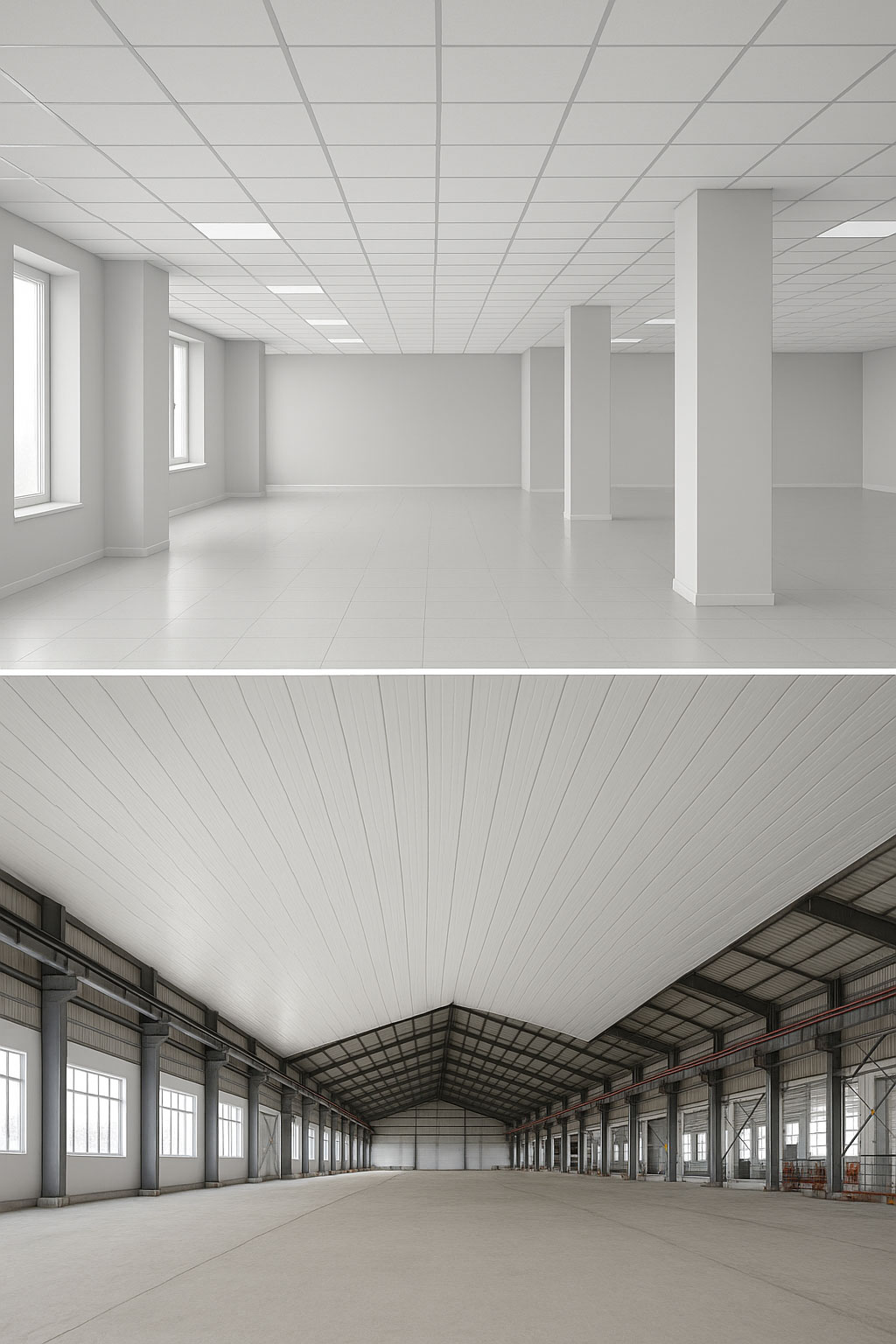
Anatomy of a High-Performance Line
TwinScrew has engineered their system not as a collection of parts, but as a synchronized ecosystem designed for precision. Let’s look under the hood of what makes this "Complete Extrusion System" work:
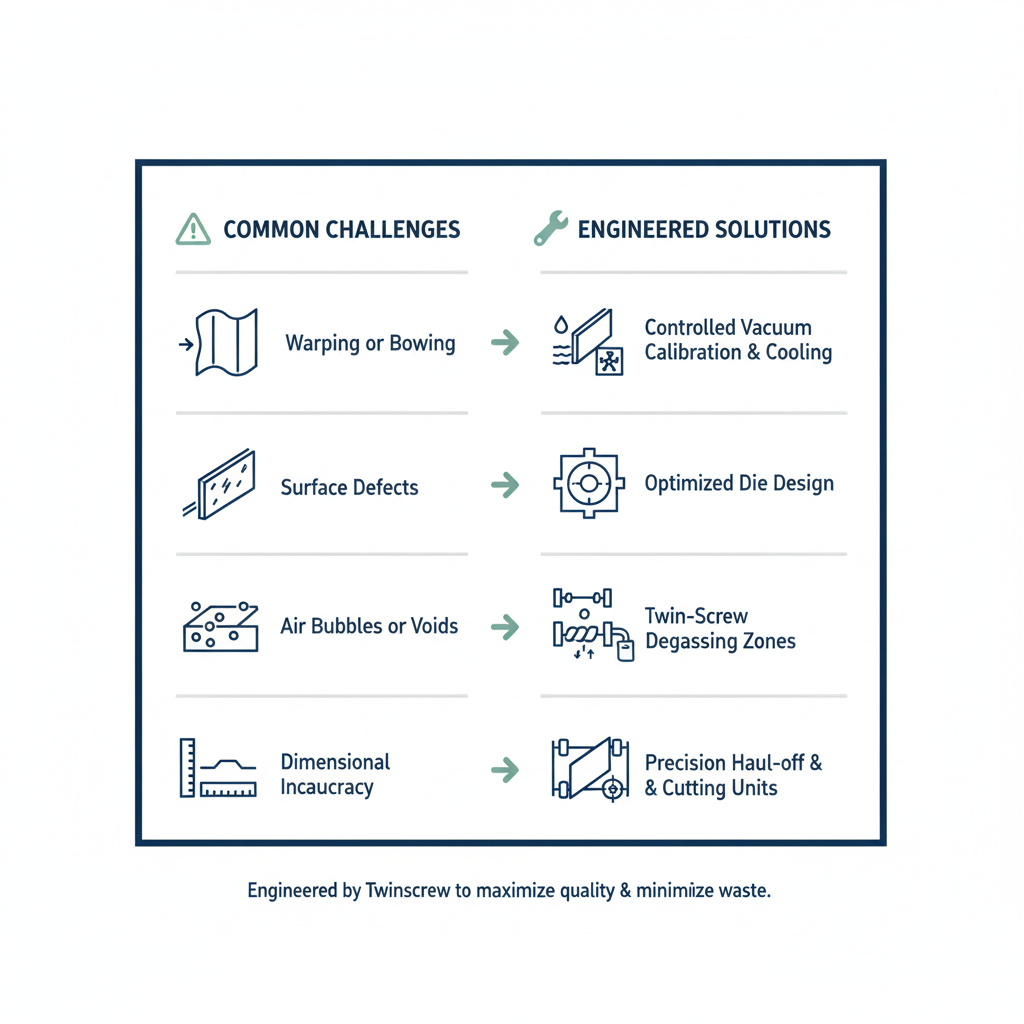
- The Engine (Twin-Screw Extruder): The core of the operation. It melts and homogenizes the PVC compound. Crucially, it features degassing zones to remove trapped air and moisture—the primary culprits behind bubbles and surface voids.
- The Shaper (Extrusion Die): This shapes the molten PVC into precise profiles. TwinScrew’s die design ensures uniform flow, eliminating the common problem of "wavy" surfaces.
- The Stabilizer (Calibration & Cooling): Hot PVC is soft and prone to warping. This unit uses vacuum technology to "freeze" the panel’s dimensions instantly, ensuring flatness.
- The Finisher (Haul-off & Cutting): This pulls the profile at a consistent speed and cuts it to exact lengths, minimizing material waste.
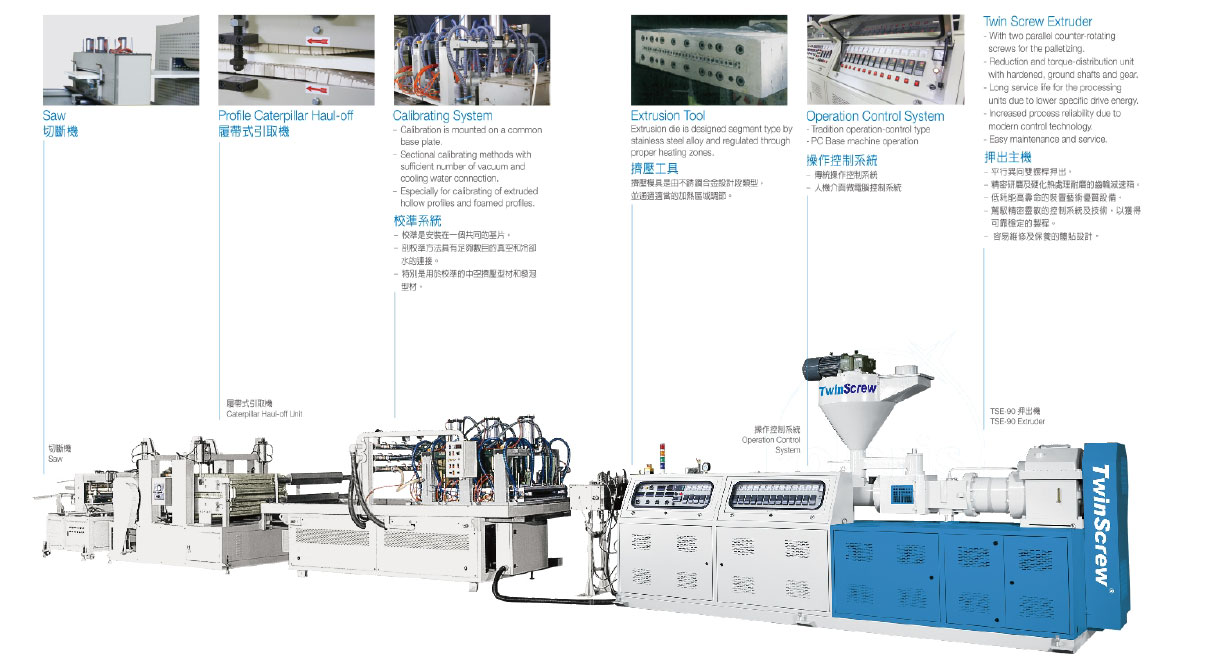
Case Study: A Transformation in Southeast Asia
Theory is good, but results matter. A recent project in Southeast Asia perfectly illustrates the impact of upgrading to TwinScrew technology.
The Challenge: A local manufacturer was struggling with outdated equipment. Their old single-screw machines were energy-hungry and unstable. They faced high rejection rates because their panels often had inconsistent surfaces ("shark skin" effect) or slight bowing, making them impossible to sell to premium commercial developers.
The Solution: The factory replaced their legacy line with a TwinScrew PVC Ceiling Machine.
The Results:
- Quality Leap: The new panels featured smooth, premium surfaces with perfect dimensional consistency. This allowed the client to immediately raise their price point and enter the hotel renovation market.
- Energy Efficiency: Despite the higher output, the energy consumption of the line dropped by 25%. TwinScrew’s optimized heating systems and efficient drive trains turned a major cost center into savings.
- ROI Speed: With reduced scrap rates (less wasted material) and lower electricity bills, the client reported a rapid return on investment.
"It wasn't just about buying a machine," the factory owner noted. "It was about stopping the waste of money on electricity and bad product."
Engineered for the Future: Industry 4.0 and Beyond
For B2B buyers, purchasing machinery is a 10-to-20-year commitment. TwinScrew addresses this by future-proofing their equipment.
The machines are built on a foundation of top-tier global components—Siemens, ABB (including B&R automation), Schneider, and Fuji. This isn't just name-dropping; it ensures that if a part needs replacing five years from now, the component is available anywhere in the world.
Furthermore, the integration of PLC Real-Time Monitoring allows operators to oversee the entire line from a touchscreen. This reduces the reliance on "gut feeling" and moves production toward data-driven precision. Whether it's the TSE-75 model for standard production or the massive TSE-130 (capable of 1200 kg/h output), the control logic remains intuitive and robust.
Versatility as a Business Strategy
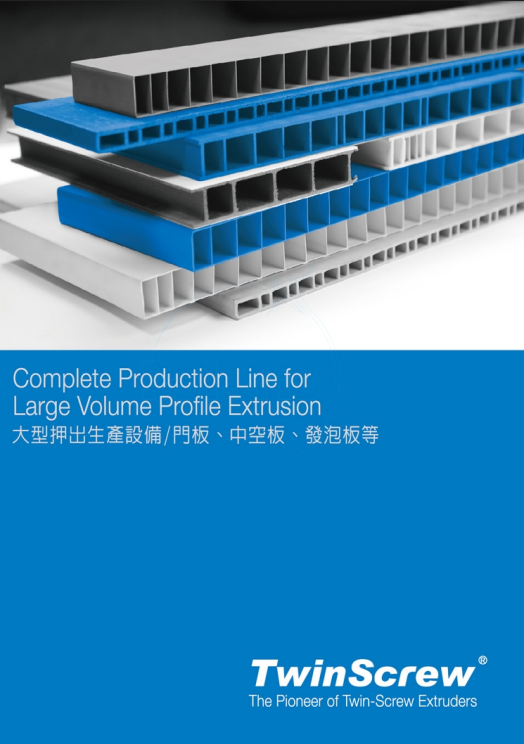
Finally, in a volatile market, flexibility is key. While the machine is optimized for ceiling panels (up to 800mm wide), TwinScrew offers configurations for Large Volume Profile Extrusion Lines.9 This means the same foundational technology can be adapted to produce windows, doors, gutters, or decking.
For a manufacturer, this is insurance. If the ceiling market slows down, they can pivot to window profiles or outdoor decking without reinventing their entire factory floor.
Conclusion: A Strategic Partnership
The global shift toward safer, cleaner, and more durable building materials is not a passing trend; it is the new standard. PVC ceiling panels are at the forefront of this shift, replacing traditional materials in residential bathrooms, commercial offices, and industrial healthcare facilities alike.
However, capitalizing on this demand requires the right tools. A PVC Ceiling Machine is the heart of the factory.10 If the heart is weak, the business struggles.
With over 30 years of innovation and 3,000 systems running in 40+ countries, TwinScrew offers more than just hardware. They offer the process knowledge—the "know-how"—to turn raw powder into a high-margin, safety-compliant product.
For manufacturers looking to upgrade their production line, the question is no longer "Can we afford a high-end twin-screw machine?" It is, "Can we afford to compete without one?"
Why Upgrade from Single-Screw to Twin-Screw?
| Feature | Single-Screw Extruder | TwinScrew (Twin-Screw Extruder) |
|---|---|---|
| Mixing Capability | Limited; often requires pre-mixed pellets. | Superior; handles powder, high fillers, and additives easily. |
| Material Flexibility | Standard PVC only. | High Flexibility; handles Recycled Material & Calcium Carbonate fillers. |
| Output Quality | Variable; prone to surging. | Consistent; stable pressure for dimensional accuracy. |
| Throughput | Moderate. | High Throughput at stable quality. |
Ready to future-proof your production? Contact TwinScrew today to discuss how our PVC Ceiling Machines can accelerate your ROI.


Кооперативный партнер