


 English - EN
  繁體 - ZH-TW
  简体 - ZH-CN
  Español - ES
  日本語 - JA
  العربية - AR
  Русский - RU
  Français - FR
Bangladesh’s Logistics Reality: Why the "Thicker is Better" Myth is Costing Exporters Millions
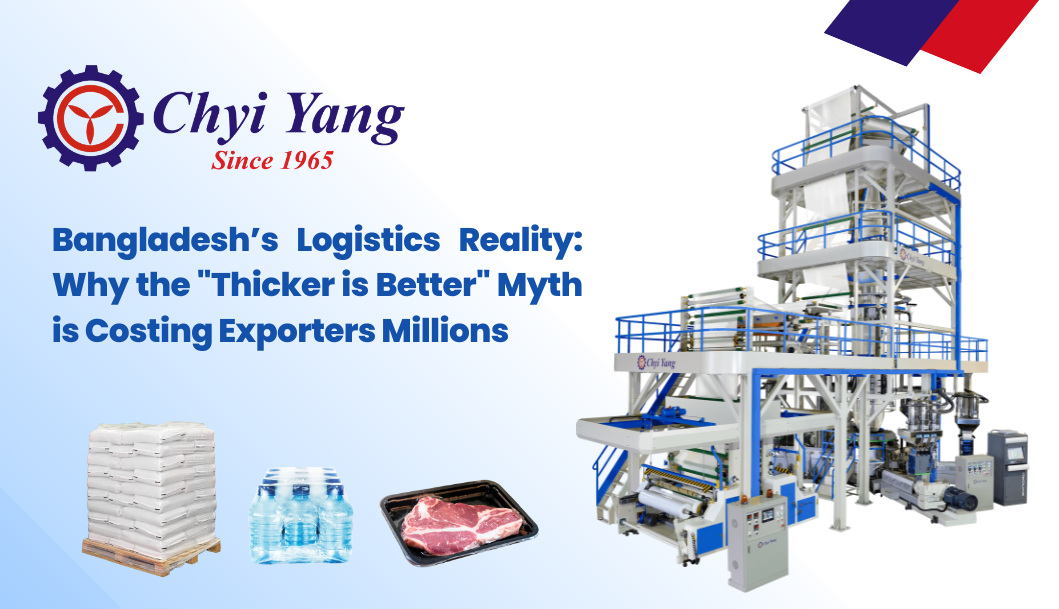
As global supply chains tighten, the country’s top exporters are discovering that the secret to securing cargo—and profits—lies in advanced 7-layer technology. In the bustling industrial zones of Dhaka and the frantic ports of Chittagong, the air is thick with the energy of production. Bangladesh remains the world’s quiet giant—a powerhouse of Ready-Made Garments (RMG) and a rising contender in the global frozen food sector.
But for years, local manufacturers have faced a silent, frustrating enemy: The Journey.
You can stitch the perfect denim jeans or harvest the freshest Tiger Shrimp, but if the pallet collapses during transit to Hamburg, or if the vacuum seal breaks before reaching a supermarket in New York, that value evaporates. It is the heartbreak of the export world.
For decades, the local solution in Bangladesh logistics was simply "use more plastic." Wrap it thicker. Wrap it tighter. But in 2026, with global resin prices fluctuating and international buyers demanding sustainability, "more" is no longer the answer. "Smart" is.
A quiet revolution is happening on the factory floors. The traditional mono-layer machines are being retired, replaced by advanced 7-Layer Co-Extrusion technology. This isn't just an equipment upgrade; it’s a strategic pivot for the entire nation's supply chain.
The Logistics Dilemma: Doing More with Less
The first battleground is logistics efficiency. Bangladesh exports billions of dollars in textiles annually. These goods are stacked on pallets and wrapped in stretch film before enduring the rugged road to the port.
In the past, factories used simple 3-layer films. To ensure the heavy boxes didn't topple on bumpy roads, they had to use thick, heavy film. It was a crude approach that wasted material and inflated shipping weights.
The shift to 7-layer co-extrusion technology is changing the math. By splitting the film into seven distinct layers, manufacturers can now engineer a "sandwich" structure that defies traditional logic: the film is thinner, yet significantly stronger. This is the concept of "Downgauging."
Industry data suggests that switching to a multi-layer structure allows producers to drop from a standard 25-micron film to a high-performance 15-micron film. The outer layers are fortified with Metallocene PE (mLLDPE) for superior puncture resistance and cling, while the inner layers—safely tucked away—can utilize more cost-effective resins or recycled materials.
For a logistics manager in Gazipur, this means the cost per pallet goes down, while the load stability goes up. It is a rare "win-win" in industrial manufacturing.
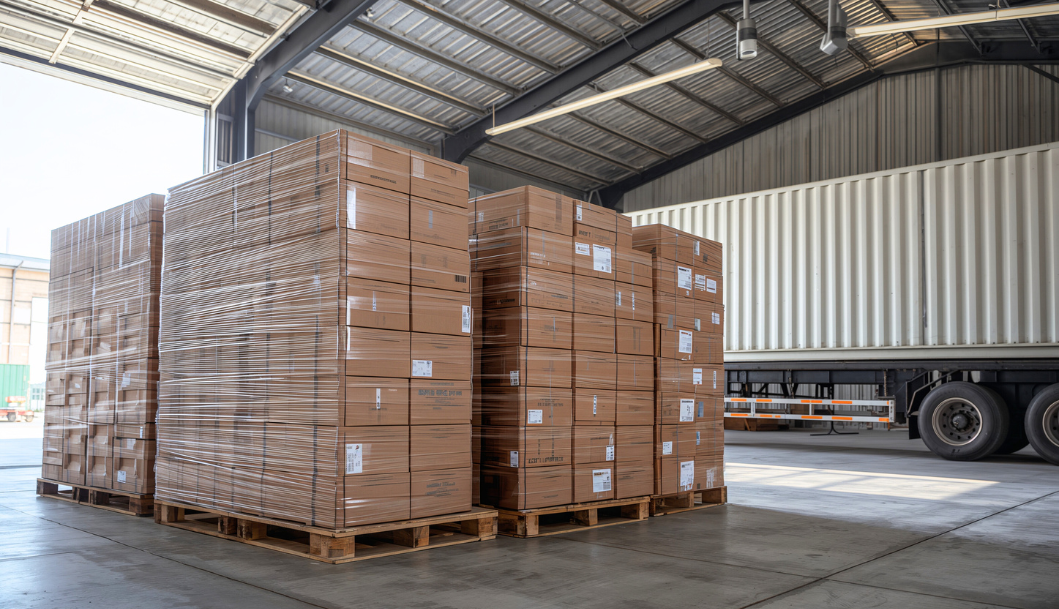
For decades, the local solution in Bangladesh logistics was simply "use more plastic." Wrap it thicker. Wrap it tighter.
The "Second Skin": A Revolution for Seafood
While the RMG sector worries about pallets, the frozen food sector is fighting a different war: Shelf Appeal.
Bangladesh’s fishery exports are booming, but presentation has historically been a hurdle. Traditional vacuum bags often leave air pockets, leading to ice crystals (freezer burn) and making premium shrimp look, frankly, less than premium on a European shelf.
This is where the 7-layer technology flexes its chemical muscles. The most advanced factories are now producing VSP (Vacuum Skin Packaging) films.
Unlike standard plastic, these multi-layer films are engineered with high-barrier materials like PA (Polyamide/Nylon) and EVOH (Ethylene Vinyl Alcohol) deeply embedded in the structure.
-
PA (Nylon)
Provides the toughness and thermoforming capability, allowing the film to drape over a fish or steak like a second skin, conforming to every contour without crushing the product.
-
EVOH
Acts as an oxygen fortress, locking out air to extend shelf life significantly.
The result? A product that looks crystal clear and fresh after weeks of transit. It allows Bangladeshi exporters to move from selling "frozen commodities" to selling "premium consumer goods."
The Technology Enabler
Of course, this level of sophistication requires machinery that can handle the complexity. You cannot bake a seven-layer cake in a toaster.
This demand for precision has opened the door for specialized machinery providers who can bridge the gap between European tech and Asian practicality. One prominent name gaining traction in this sector is Taiwan’s Chyi Yang Industrial Co., Ltd.
Unlike European manufacturers who often provide rigid, overly complex systems, Chyi Yang has carved a niche by offering 7-layer lines that are robust enough for the challenging power conditions of South Asia, yet precise enough to handle sensitive materials like EVOH. Their technology is becoming the "secret weapon" for Bangladeshi manufacturers looking to upgrade without breaking the bank.
View from the Field: "It’s About Control, Not Just Plastic"
To understand the human side of this technological shift, we spoke with Renee, a seasoned Sales Manager at Chyi Yang who has spent years consulting with manufacturers in the region.
"When we first introduce the 7-layer concept, clients often look at the machine and say, 'Renee, this is a spaceship, I just need a bicycle!'" Renee laughs. "But then we sit down and do the math on their raw material spending and waste rates."
She emphasizes that for Bangladeshi exporters, the machinery isn't just about production capacity—it's about precision in a low-margin game.
"I tell them, 'We aren't just selling you iron and screws. We are giving you a recipe to control your costs,'" Renee explains. "Whether it’s minimizing resin usage or ensuring consistent thickness to satisfy European buyers, the machine has to be a tool for stability. In this market, control is the only way to secure long-term orders."
The Future is Multi-Layered
The global market is not getting any less demanding. For Bangladesh, the path forward is clear: upgrade or risk being left behind.
The adoption of 7-layer co-extrusion technology—capable of handling everything from rugged logistics wrapping to delicate high-barrier food packaging—marks a turning point. It is a bold investment, yes. But as the containers leave the port of Chittagong, wrapped securely and preserved perfectly, it’s an investment that pays for itself with every nautical mile.
Visit Chyi Yang at IPF Bangladesh booth no. 119!

Кооперативный партнер